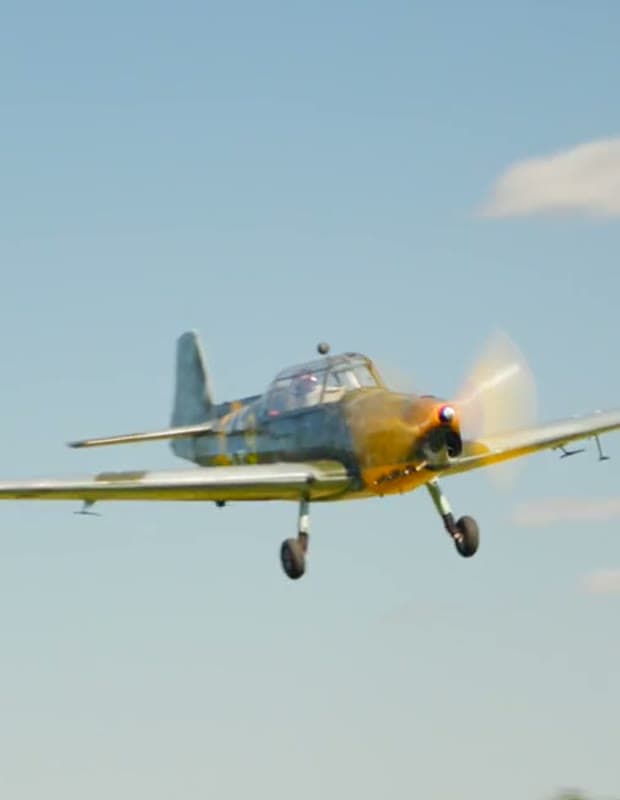
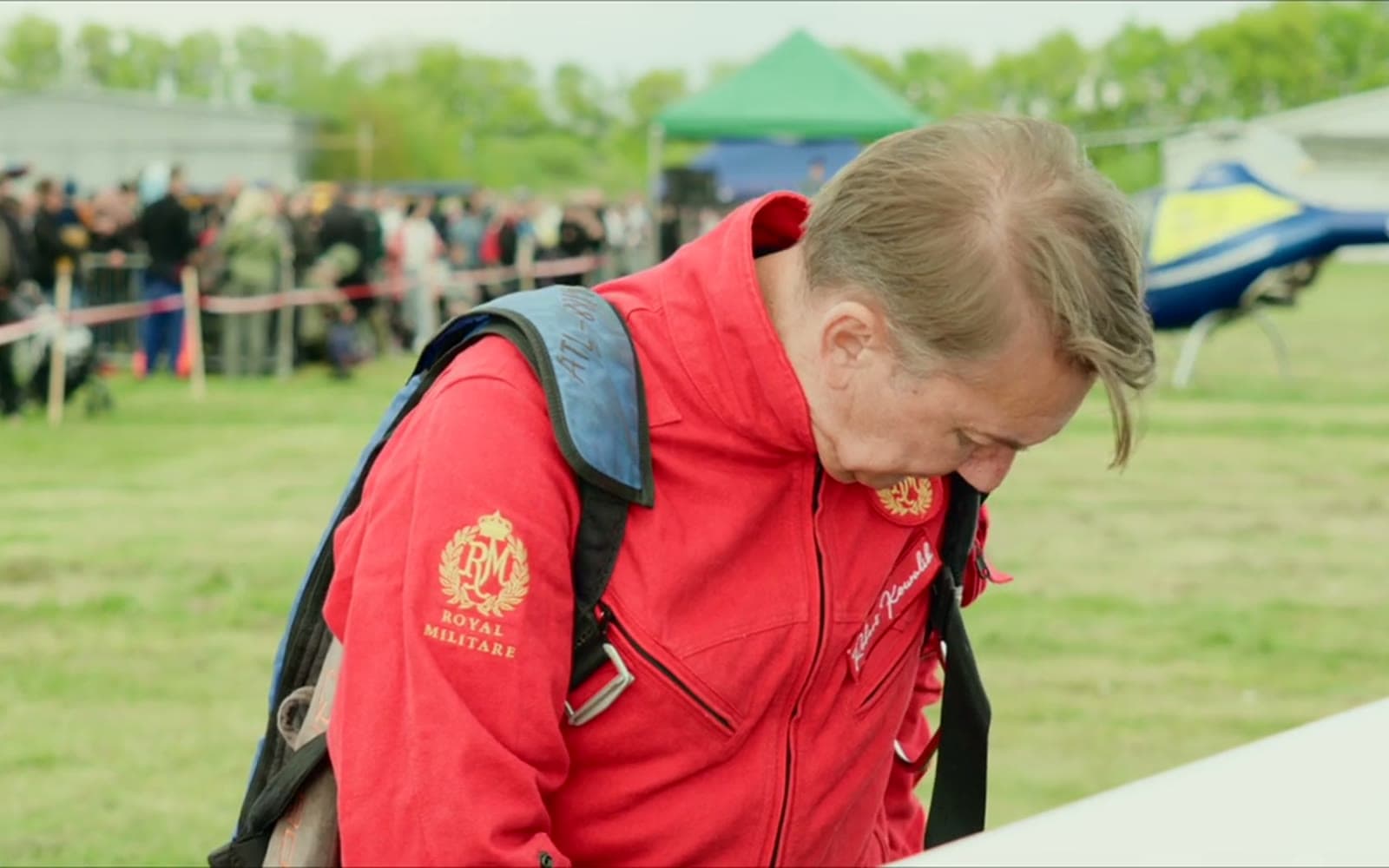
We've made a few productions for aviation clients: a film about display pilot Robert Kowalik, a vertical piece for helicopter company Helisolution, and coverage of the JedlinSky 2025 airshow. Shots of a UH-1 helicopter against the sunset made it into our showreel. This piece walks through what that kind of video production looks like from the inside.
An airfield isn't a film set, and a drone has its limits
The first difference from a regular shoot is that we don't set the rules on the apron. The organizer, the flight director and common sense do. The film crew gets a zone they can move in, and a line nobody but ground staff crosses.
That's why every production starts with a conversation with the organizer, before we plan a single shot. We ask about the minute-by-minute schedule, the direction of the flypasts, where cameras can be placed, and who has the authority to stop us at any moment. An operator who doesn't sort that out ahead of time will sooner or later end up somewhere they shouldn't be.
The practical takeaway for companies ordering a film: a good crew will ask a lot of safety questions before they ask about budget. If a crew promises a shot from twenty meters off a moving aircraft right away, it's worth asking on what basis.
A drone gets shots you can't get any other way, but in aviation it's the most restricted tool on set. You need a registered operator, a pilot license for that flight category, permission to enter the airspace around the airfield, and separate approval from the event organizer.
Airshows have one more rule, simple and non-negotiable: when the program is in the air, the drone isn't. So we fly the drone before the show, after it, or in windows agreed with the flight director. The rest of the aerial footage comes from onboard the aircraft, if the client allows it.
That sounds like a list of restrictions, and it is. In exchange you get something no stock animation can fake: a real wing, a real hangar and real scale.
Robert Kowalik: a film about the person, not the plane
For a film about a display pilot, the easy route would be to cut together nothing but aerobatics. We did it differently: the footage opens on the ground, during preparation, and only then moves into takeoff and aerobatics. The camera stays close to the person.
The film has no voiceover. A narrator in this kind of piece usually just explains what's already on screen, and it drains the weight out of it. We kept the picture, the editing rhythm and the sound. This is the piece that opens the dopest.video homepage today, because it shows the most in the least time.
Most of the work on a film like this goes into things you never see on screen: figuring out when the pilot has time before the flight, where you're allowed to stand during taxiing, and which shot can't be repeated. Editing is simple after that, because the footage already has its own logic from the first frame.
Helisolution: a vertical piece that has to hold attention to the end
For the helicopter company we made a vertical piece, built for social media from the start. Aerial shots and hangar shots, cut to a rhythm that doesn't let attention drift. With vertical video, the first second matters most, because the decision to scroll past happens faster than a logo can appear.
Vertical format changes how you frame on set. A helicopter in landscape looks good in a wide shot; in vertical you have to move in closer and hunt for detail: the rotor, the cockpit, hands on the controls. That's not something you fix by cropping in post, it's a decision made at the moment of shooting.
Vertical also works well in direct sales. You can send that file in a message to a potential client and they'll watch the whole thing on their phone, no scrolling, no rotating the screen. A landscape film in that same context usually gets left half-watched.
JedlinSky 2025: several shoot days, one film and a full set of short cuts
We worked several days on the airshow. The footage includes flypasts, a fireball and the crowd, because airshow footage without people in the stands looks like a technical recording. From that we built one cohesive event film plus shorter cuts for social media.
An event runs on the rule that there's no second take. If a flypast worked once, it worked once. That's why more than one camera is on site for jobs like this, and the shot list gets built ahead of time, with the event schedule in hand.
Airshow coverage has another audience that's easy to forget: the organizer of next year's edition and their sponsors. That's why we show the scale of the event, not only the most spectacular maneuvers. A full grandstand is an argument in next year's budget conversation.
Ground, air and engine sound
A good aviation film needs both points of view. From the ground you see scale, and what the audience sees: the aircraft entering the frame overhead. From the air you see geometry: the layout of the airfield, the horizon, how the aircraft relates to the landscape. Drone footage alone looks pretty and empty.
Sound does roughly half the work in these films. A piston engine, a turbine and a rotor sound completely different, and viewers feel that even if they can't name it. We record sound separately, on the ground, because the camera's own audio at that volume is only good for syncing.
In the edit, music then takes a back seat. The strongest seconds in aviation films are usually the ones where it's just the engine.
Weather in aviation is part of the script, not the backdrop. Low sun gives contrast and long shadows; flat midday light kills the aircraft's shape. So when we plan a shoot day, we ask about the time, not just the date, and check whether the flight can shift by an hour.
One shoot day, several versions of the footage
From the same footage we build a landscape version for the website and presentations, plus vertical versions for social. That's not a side crop, it's a separate edit: different pacing, different framing, different space for text, a shorter intro.
Worth keeping in mind when budgeting: the cost of extra versions is a fraction of the cost of the shoot day itself. The expensive part is getting people, equipment and weather together in one place. Once that's happened, it would be a waste to leave with just one file.
We leave the raw footage with the client if they want to use it later. In aviation, footage from one season keeps coming back in later publications, and hiring an operator again just to cut ten seconds for a single post wastes everyone's time.
What video gives an aviation company
Aviation sells things that are hard to put into words: a pilot's experience, the condition of the aircraft, the way the crew works. A photo can't carry that, and a spec sheet doesn't convince anyone outside the industry. Film shows both in about fifteen seconds.
There's also a recruiting and partnership effect clients rarely think about when they order a film. The same piece gets watched by a potential client, a future employee, an event organizer and a sponsor. In an industry where everyone knows everyone, a good film keeps circulating long after it first goes out.
A well shot piece also has a staying power a website doesn't. A site gets redesigned every few years, but footage from a hangar or the apron comes back later in a new layout, in a presentation, in an ad. Picture ages more slowly than the graphic design around it.
If you run an aviation company, organize airshows, or fly display, treat video as a season's investment, not a single file. Plan one solid shoot day in good conditions, agree on safety rules with the crew before planning shots, and order a landscape and a vertical version right away. The footage will keep working for a year.
If you want to talk timing, or just see more of our aviation work, write to hello@dopest.studio.